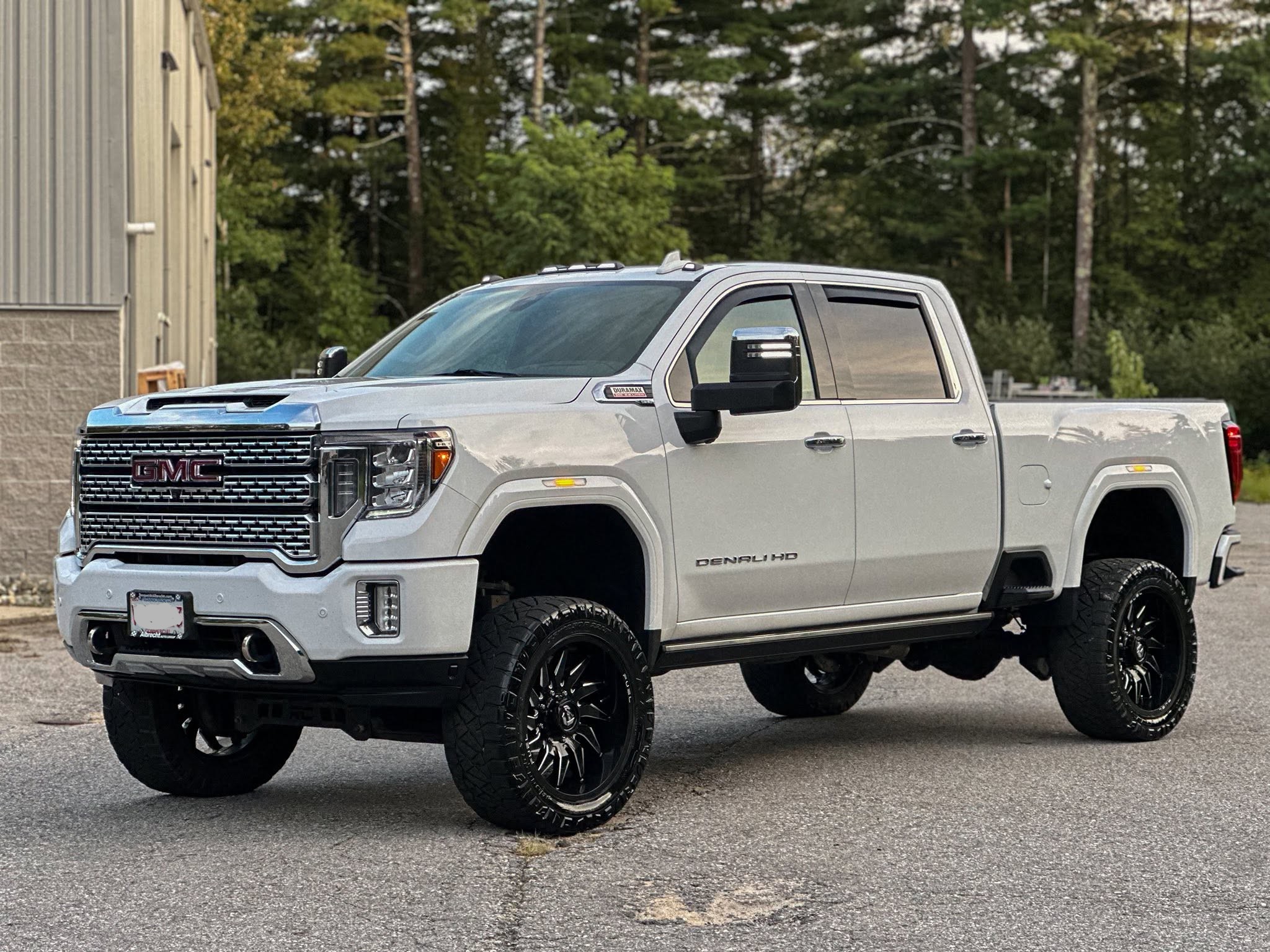
White paint doesn't hide defects—it simply hides them better.
When the paint reflects light evenly, white finishes develop a level of clarity, gloss, and depth that many owners never realize they're missing.
Answers about ceramic coating, paint correction, vehicle protection, and proper long-term maintenance for drivers in New Hampshire and New England.
Ceramic coating longevity in New England depends far more on preparation and ongoing care than the advertised “years” attached to the product. Harsh winters, road salt, and temperature swings don’t automatically degrade a coating—but they will expose improper prep or neglected maintenance quickly.
When a coating is applied over properly corrected, decontaminated paint and followed by a structured maintenance program designed to preserve performance and ensure the coating continues to meet warranty standards, it can perform consistently through multiple winter seasons. This includes routine care and periodic inspections to ensure the coating continues to perform as intended.
When coatings fail prematurely, it is almost always due to what was underneath the coating—or how it was maintained afterward—not the environment itself.
Midnight Detailing’s annual ceramic coating maintenance service includes a thorough exterior decontamination detail, evaluation of the coating’s hydrophobic performance, and inspection of areas that experience greater wear.
If a high-wear area does not pass inspection, ceramic protection is reapplied to that area as needed. This structured maintenance allows coating performance to be monitored, developing concerns to be addressed, and the client’s investment to remain supported beyond the original installation.
In most cases, yes.
Ceramic coating does not correct paint—it locks in whatever condition the surface is in. If swirls, haze, or oxidation are present before application, they will still be visible after the coating cures, often with increased clarity that makes defects stand out even more.
Proper paint correction ensures the coating is applied to a clean, refined surface so the final result reflects depth, clarity, and uniform gloss—not preserved imperfections.
Black paint doesn’t necessarily scratch more—it just reveals everything.
Because black surfaces reflect light more directly, even minor imperfections disrupt that reflection and become highly visible. Swirls, micro-marring, and haze scatter light across the surface, which is why black vehicles tend to look dull or “washed out” when not properly maintained.
Correcting black paint requires a more precise finishing process to achieve a clean, distortion-free reflection.
Absolutely.
White paint has a reputation for hiding swirl marks and fine scratches, but those defects don't disappear—they simply become harder to see individually.
Instead of reflecting light evenly, thousands of microscopic imperfections scatter light across the surface. The result is a finish that can appear flat, dull, or lacking the crisp, bright appearance many owners expect from white paint.
Professional paint correction restores how light reflects from the surface, revealing noticeably greater clarity, gloss, and depth. That's why properly refined white paint often appears brighter, richer, and more vibrant—even though the color itself hasn't changed.
Applying a ceramic coating afterward enhances that appearance by increasing gloss, improving water behavior, making routine maintenance easier, and helping preserve the finish for years to come.
White paint doesn't hide defects—it simply hides them better.
When the paint reflects light evenly, white finishes develop a level of clarity, gloss, and depth that many owners never realize they're missing.
Every vehicle is evaluated individually because every finish is different. Our goal is always to preserve as much clear coat as possible while achieving the best finish the paint will safely allow.
Yes—especially brush-style automatic washes.
Many automatic car washes reuse contaminated brushes or materials that come into contact with multiple vehicles throughout the day. Dirt and debris trapped in those materials can create swirl marks, micro-marring, and surface scratching over time—particularly on darker finishes.
Even touchless washes can leave behind heavy chemical residue if used excessively. While occasional use may be better than neglecting the vehicle entirely, proper hand washing methods remain the safest long-term approach for preserving paint quality and ceramic coating performance.
Yes.
Even high-quality microfiber towels or wash mitts can damage paint if they are contaminated, improperly maintained, or used incorrectly. Dirt particles trapped in the fibers can create micro-scratches during washing or drying, especially on softer or darker finishes.
Safe washing methods involve:
• clean wash media
• proper lubrication
• controlled washing patterns
• regular towel replacement
• separation of wheel and paint towels
Proper maintenance practices are one of the biggest factors in preserving corrected and coated finishes long-term.
Detailing and paint correction are often grouped together, but they serve different purposes.
Detailing focuses on cleaning, restoring, and protecting a vehicle. This can include washing, decontamination, interior cleaning, trim restoration, and protective treatments designed to improve the vehicle's overall appearance.
Paint correction focuses specifically on the condition of the paint. Through a measured polishing process, defects such as swirl marks, oxidation, haze, water spot etching, and other imperfections are reduced or removed to improve clarity, gloss, and reflection quality.
Depending on the severity of the defects, correction may involve multiple polishing stages and, in some cases, more advanced techniques such as localized wet sanding to address deeper imperfections safely.
A vehicle can be thoroughly detailed and still have visible paint defects. That's because cleaning the surface and correcting the surface are two different processes.
In simple terms, detailing improves cleanliness and presentation. Paint correction improves the condition of the paint itself.
A decontamination wash removes embedded contaminants that a standard wash cannot—such as iron particles, road film, industrial fallout, and bonded debris.
Even vehicles that appear clean often have contamination embedded in the paint, which creates a rough surface and interferes with polishing or protection. Without proper decontamination, polishing becomes less effective and protective products cannot bond correctly.
It is a critical step before any paint correction or ceramic coating process.
Wax provides a short-term layer of protection that enhances gloss but wears off relatively quickly—often within weeks to a few months depending on conditions.
Ceramic coating forms a more durable, chemically resistant layer that bonds to the surface. It improves water behavior, reduces contamination buildup, and makes maintenance significantly easier over time.
However, long-term performance isn’t just a result of the coating itself—it’s the result of how it’s maintained. A properly managed coating system will continue to perform consistently, whereas neglected surfaces can lose effectiveness regardless of the product used.
No.
Ceramic coating is not designed to absorb impact or prevent physical damage such as rock chips or deeper scratches. Its purpose is surface protection—resisting contamination, improving cleanability, and maintaining finish quality.
For impact protection, products like paint protection film (PPF) are required. Ceramic coatings and PPF serve different roles and are often used together depending on the level of protection desired.
This depends on how the vehicle is used, but more importantly, how it is maintained between services.
For daily drivers, a full detail every 4–6 months helps reset the condition of the vehicle and prevent long-term buildup of contamination. However, vehicles with ceramic protection benefit most from a structured maintenance approach rather than sporadic detailing.
Ongoing care—through proper wash methods and periodic maintenance services—preserves both the appearance of the vehicle and the performance of any protective systems applied. Without that consistency, even high-end protection will gradually decline.
In most cases, no.
While mobile detailing can be convenient, it is often limited by environment, lighting, and access to proper equipment. Factors like direct sunlight, inconsistent power, and uncontrolled conditions can impact the quality of the work—especially for paint correction and coating applications.
A controlled shop environment allows for more precise results, consistent lighting for defect removal, and proper curing conditions for coatings.
Yes—but not by preventing buildup entirely.
Ceramic coatings reduce how aggressively contaminants like bug residue and pollen bond to the surface, making them easier to remove before they cause damage. Without protection, these materials can etch into the paint if left too long.
Consistent maintenance becomes especially important during high-exposure seasons. Regular cleaning ensures contaminants are removed before they have the opportunity to degrade the surface or interfere with the coating’s performance.
Changes in water behavior do not always mean a ceramic coating has failed.
Ceramic coatings rely on hydrophobic surface properties that may appear as water beading, water sheeting, or rapid water release depending on the surface condition and environment.
In many cases, mineral deposits, road film, detergent residue, or environmental contamination temporarily interfere with those hydrophobic properties. Proper maintenance washing and periodic decontamination often restore performance without requiring reapplication of the coating.
Long-term coating performance depends heavily on maintenance habits and surface care—not just the coating itself.
Because washing only removes surface dirt—it does not correct the condition of the paint.
Dullness is typically caused by micro-scratches, oxidation, and contamination embedded in the surface. These defects scatter light rather than reflecting it cleanly, which reduces gloss and clarity.
Restoring that appearance requires a correction process—not just cleaning the surface.
Pricing reflects the level of correction, preparation, and time invested into each vehicle—not just the service name.
Many detailing services focus on speed and volume, which often results in temporary improvement rather than long-term results. At Midnight Detailing, the process is structured to correct and refine the surface properly, not simply mask defects or move quickly through the job.
The difference is not just in how the vehicle looks when it leaves—but how it continues to perform and maintain over time.
That depends on the current condition of the paint—but in most cases, correction is what determines the final outcome.
Without correction, existing defects such as swirls, haze, and oxidation remain in the surface. Applying protection over that condition preserves those imperfections rather than improving them.
For vehicles where the finish matters, correction is what creates the clarity and depth that protection alone cannot achieve.
A quick polish can improve appearance temporarily, but it does not produce the same level of refinement or consistency as a properly measured correction process.
In many cases, quick polishing introduces its own inconsistencies or leaves behind defects that become more noticeable under different lighting conditions.
If the goal is a short-term visual improvement, that approach can work. If the goal is a properly refined finish, it requires a more deliberate process.
The difference is in how the work is approached.
Rather than structuring services around speed or volume, the focus is on controlled correction, proper surface preparation, and long-term performance. Each vehicle is evaluated based on its condition rather than pushed through a preset process.
This results in a finish that is not only cleaner, but more consistent, more refined, and easier to maintain over time.
When applied and maintained properly, ceramic coating provides consistent, long-term benefits that go beyond initial appearance.
It improves how the surface handles contamination, makes regular maintenance easier, and helps preserve the condition of the finish between services. However, its value depends heavily on the preparation beforehand and the maintenance afterward.
Without those factors, the benefits are reduced—regardless of the product used.
That approach often leads to doing the work twice.
Lower-cost services frequently prioritize speed, which can result in incomplete correction, improper preparation, or temporary improvements that do not last. In some cases, additional work is required later to correct issues created during those initial services.
Starting with a properly structured process ensures the vehicle is corrected and protected the right way from the beginning.
The correct approach depends on the current condition of the vehicle and what you want the end result to be.
Some vehicles require only a reset and maintenance, while others need correction to address defects before protection is applied. Without seeing the condition in person, it’s difficult to recommend the right level of service accurately.
That’s why each vehicle is evaluated individually before determining the appropriate process.
Every vehicle is different. The right approach depends on the condition of the paint and what you're looking to achieve. If you have questions or want to talk through options, reach out directly.